Free fleet templates
Free DVIR Form (Driver Vehicle Inspection Report)
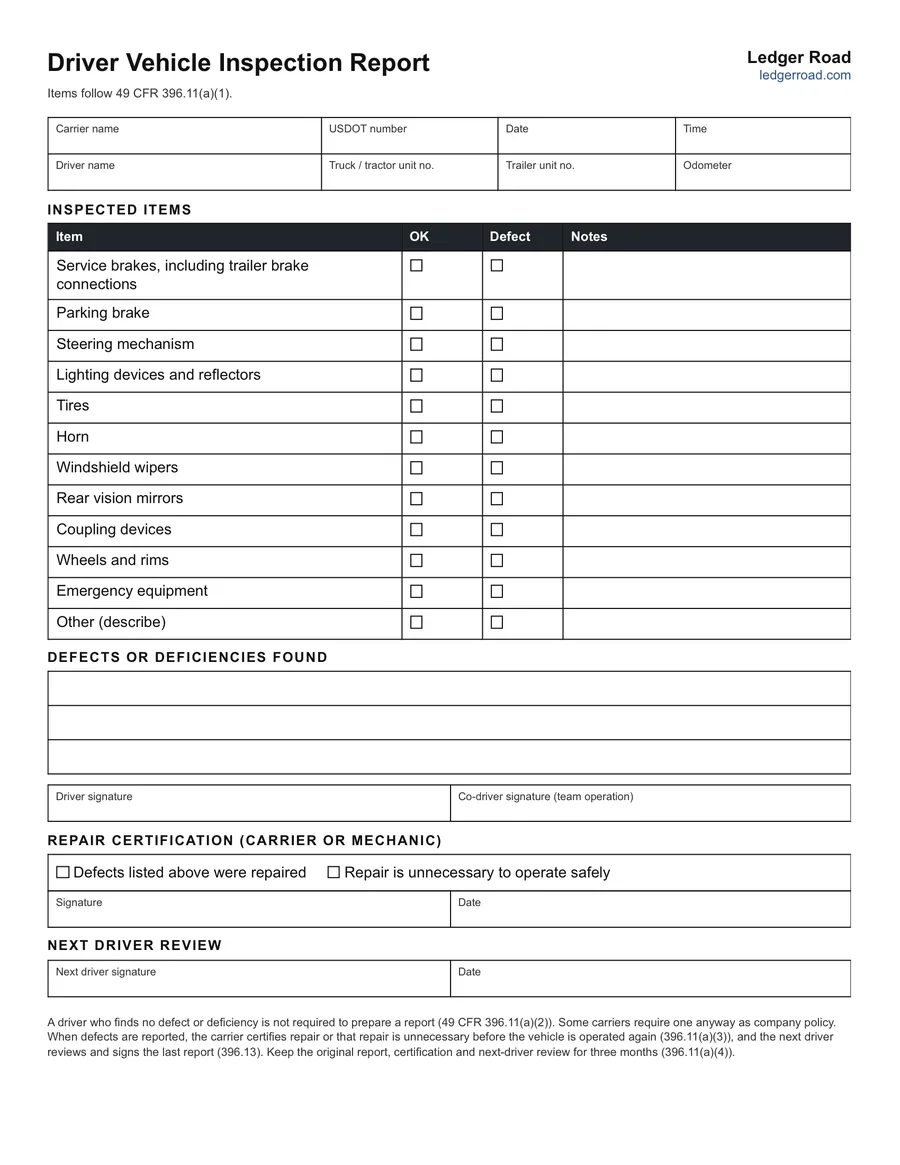
A one-page, printable driver vehicle inspection report. It covers the 11 items in 49 CFR 396.11, room to describe defects, the repair certification and the next driver's review. It comes as a PDF to print and a Word file you can edit into your own DVIR template.
No signup needed. Print as many copies as you like; it fits a single US Letter page.
What's on the form
The top block identifies the report: carrier name, USDOT number, date and time, driver, truck and trailer unit numbers and the odometer reading. Below that is a checklist of the items a report must cover under §396.11(a)(1), each with an OK box, a Defect box and a notes column:
- Service brakes, including trailer brake connections
- Parking brake
- Steering mechanism
- Lighting devices and reflectors
- Tires
- Horn
- Windshield wipers
- Rear vision mirrors
- Coupling devices
- Wheels and rims
- Emergency equipment
There's an "Other" line for anything outside the list, a space to describe each defect, driver and co-driver signature lines, a repair certification with "repaired" and "repair unnecessary" options, and a line for the next driver's review.
When a driver has to fill one out
A driver prepares a written report at the end of each day's work for each vehicle they drove, when a defect or deficiency was found or reported to them. If nothing was found, federal rules don't require a report. Plenty of carriers ask for one anyway as company policy, and this form works for that too. The DVIR requirements guide covers the details, including team drivers and multiple vehicles in a day.
Using it as a daily truck inspection form
The same sheet works for a pre-trip or post-trip walk-around. Before driving, a driver has to be satisfied the vehicle is in safe operating condition and review the last report (§396.13). Carriers that want that check in writing use this list: tick each item on the walk-around, note anything found and sign.
What happens after a defect is written up
Before the vehicle goes out again, the carrier repairs any defect likely to affect safe operation, or certifies that repair isn't needed, and signs the certification section. The next driver then reviews the last report and signs that they've seen the certification. Keep the original report, the certification and the next driver's review for three months.
An example report
A driver finishes the day in Truck 14 and notices a clearance lamp out. They tick Defect next to Lighting devices and reflectors, write "left rear clearance lamp inoperative" in the defects section and sign. The shop replaces the lamp the next morning and signs the repair certification with the date. The driver taking Truck 14 out reads the report, sees the certification and signs the review line before leaving. Three signatures on one sheet show what was found, what was fixed and who checked.
Tips for reports that hold up
- Describe the defect itself. "Tires" tells the shop where to look; "right front steer tire, cut in sidewall" tells them what to fix.
- Match unit numbers to your records. Use the same truck and trailer numbers that appear on invoices and inspection reports.
- Keep repair evidence with the form. A work order or invoice behind the certification makes it easy to show what was done.
- File by vehicle and date. When a roadside inspector or auditor asks for a truck's last three months, you want them in one place.
Questions
Is the DVIR form free to use?
Yes. There is no signup, and you can print as many copies as your drivers need. It fits one US Letter page.
Does one form cover the truck and the trailer?
Yes. The top block has a truck or tractor unit number and a trailer unit number, and the checklist includes coupling devices and trailer brake connections.
Does a driver fill one out when nothing is wrong?
Federal rules require the report only when a defect or deficiency is found or reported (49 CFR 396.11(a)(2)). Many carriers ask for one every day as company policy, and the form works for that.
How long do we keep completed forms?
Three months from the date of the report, with the repair certification and the next driver's review (49 CFR 396.11(a)(4)).
Related
Read the DVIR requirements guide →